At Gatha, the curriculum is not a fixed syllabus to be covered — it is a living, breathing journey that honours where each child is in their development, year by year.
The Waldorf Approach
A distinguishing characteristic of the Waldorf curriculum is Main Lesson block teaching — a two-hour period at the start of each day, dedicated to one subject for three to six weeks. This allows for deep immersion rather than surface coverage. After the morning academic block come artistic, practical, and movement classes.
One subject studied deeply for 3–6 weeks, allowing true engagement and retention.
Painting, music, handwork and eurythmy woven through every subject — not extras.
Each year's content matches the child's inner developmental phase — no rushing.
Ages 3–6
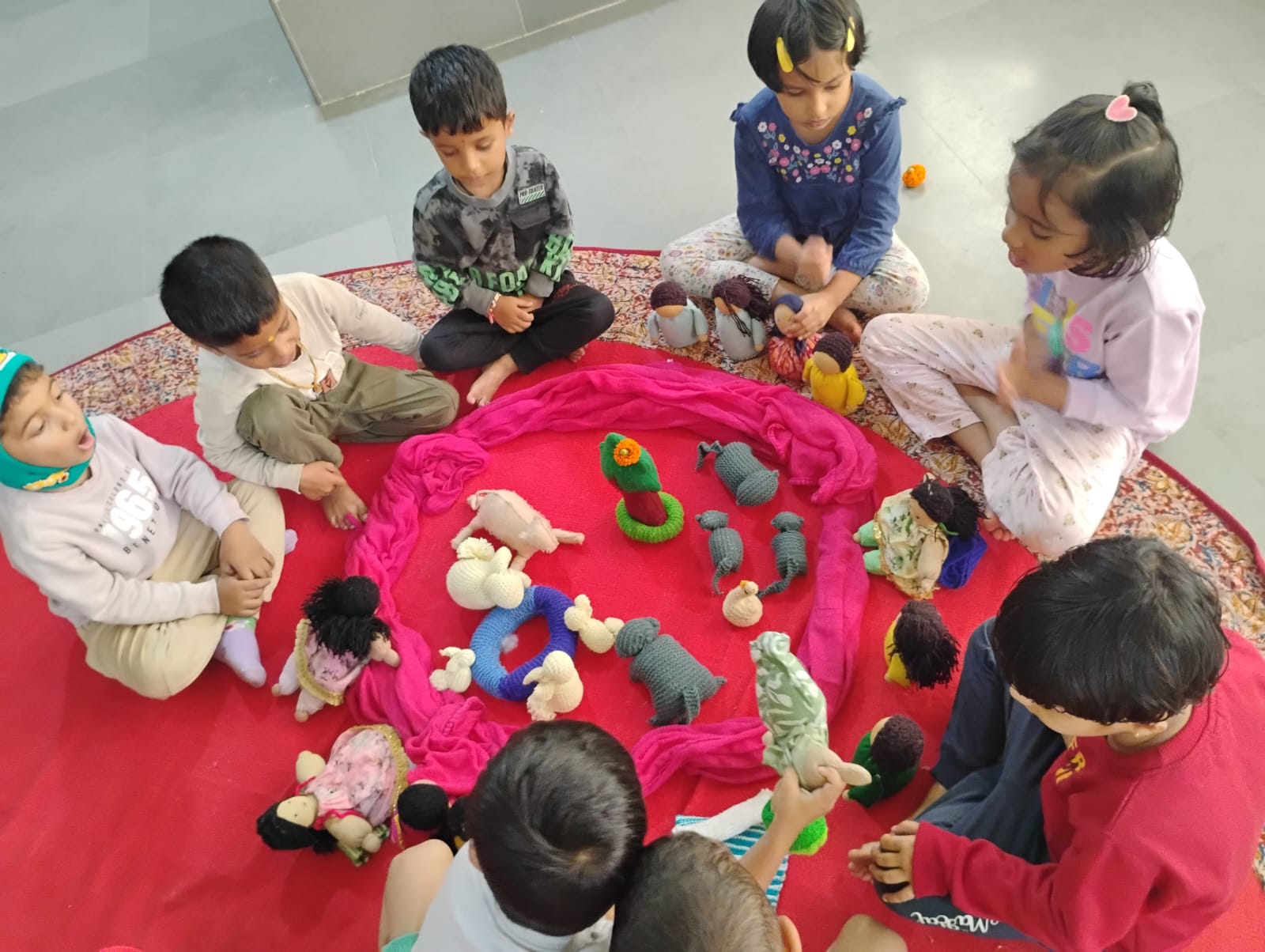
In the early years, children learn entirely through imitation, imagination, and free play. There are no workbooks, no screens, and no formal instruction. Instead, children experience a warm, rhythmic daily life — baking bread, tending the garden, hearing fairy tales, singing, and creating with natural materials.
The kindergarten day follows a gentle, predictable rhythm that gives children a sense of security. Seasonal festivals and nature celebrations mark the turning of the year.
Unstructured imaginative play with open-ended natural toys
Seasonal songs, pentatonic music, and movement games
Baking, cooking, gardening, and handwork
Fairy tales and nature stories told aloud — no books yet
Wet-on-wet painting with simple, pure colours
Beeswax modelling, finger knitting, and crafting
Grades 1–5 · Ages 6–11
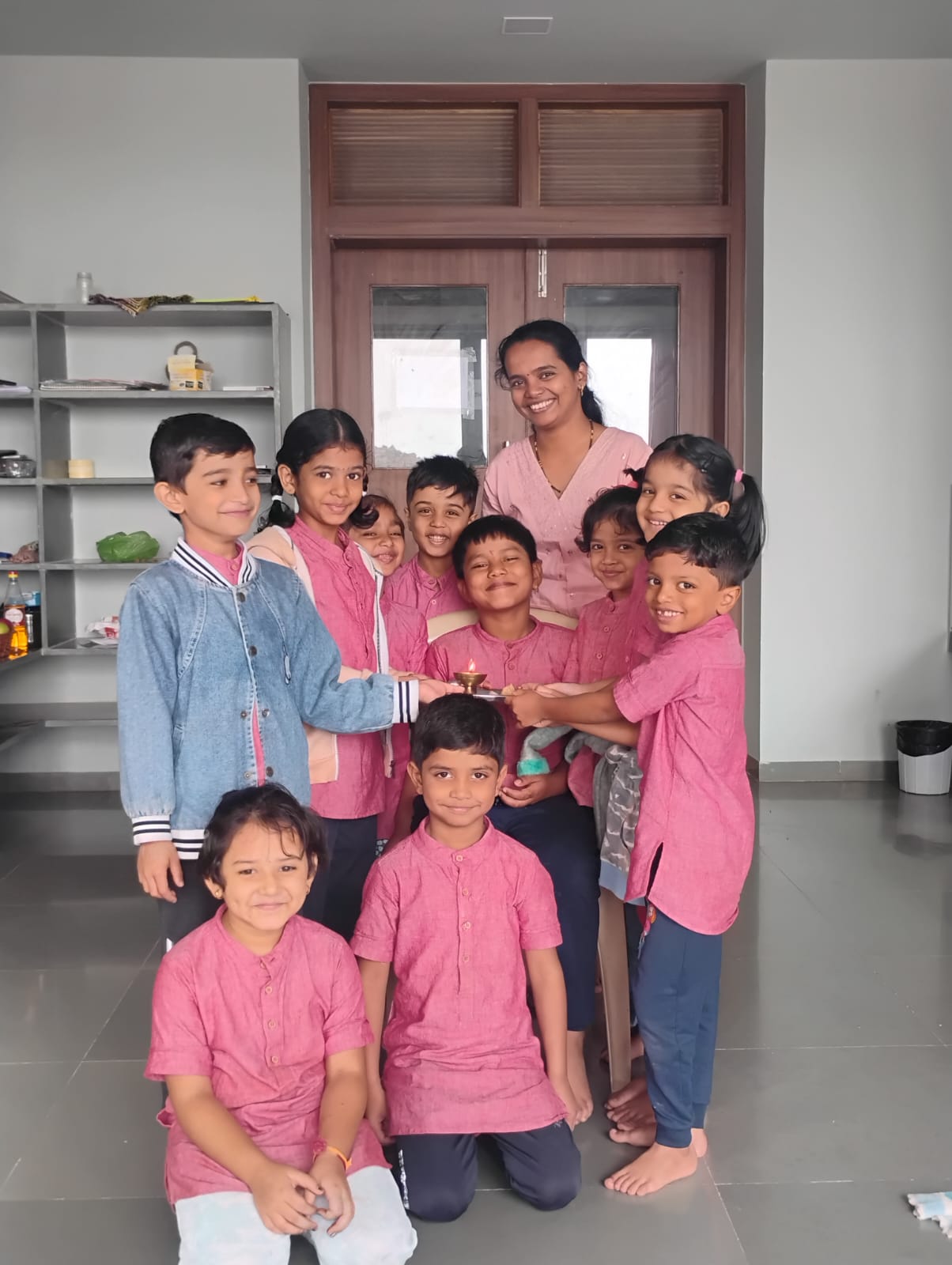
In the lower grades, the child's consciousness gradually shifts from a pictorial to a more conceptual focus. Letters are introduced through stories and chalkboard drawings before becoming abstract symbols. Arithmetic is taught through rhythm and movement before becoming abstract calculation.
The class teacher stays with the same group of children from Grade 1 through Grade 12 — building deep knowledge of each child and a continuous, coherent journey. Subject teachers bring specialist knowledge in music, handwork, games, and languages.
Reading, writing, and grammar through story and image
Four processes, fractions, and geometry through rhythm and art
Plants, animals, geography — observed directly, never abstracted
Pentatonic flute from Grade 1; singing in all grades
Knitting, crochet, sewing — developing will and fine motor skill
Watercolour, form drawing, and modelling through every grade
Grades 6–8 · Ages 12–14
In the middle grades, the Waldorf curriculum supports the child's developmental transition from active explorer to critical thinker. Students engage in the scientific process, logical reasoning in mathematics, and the study of history through its human stories.
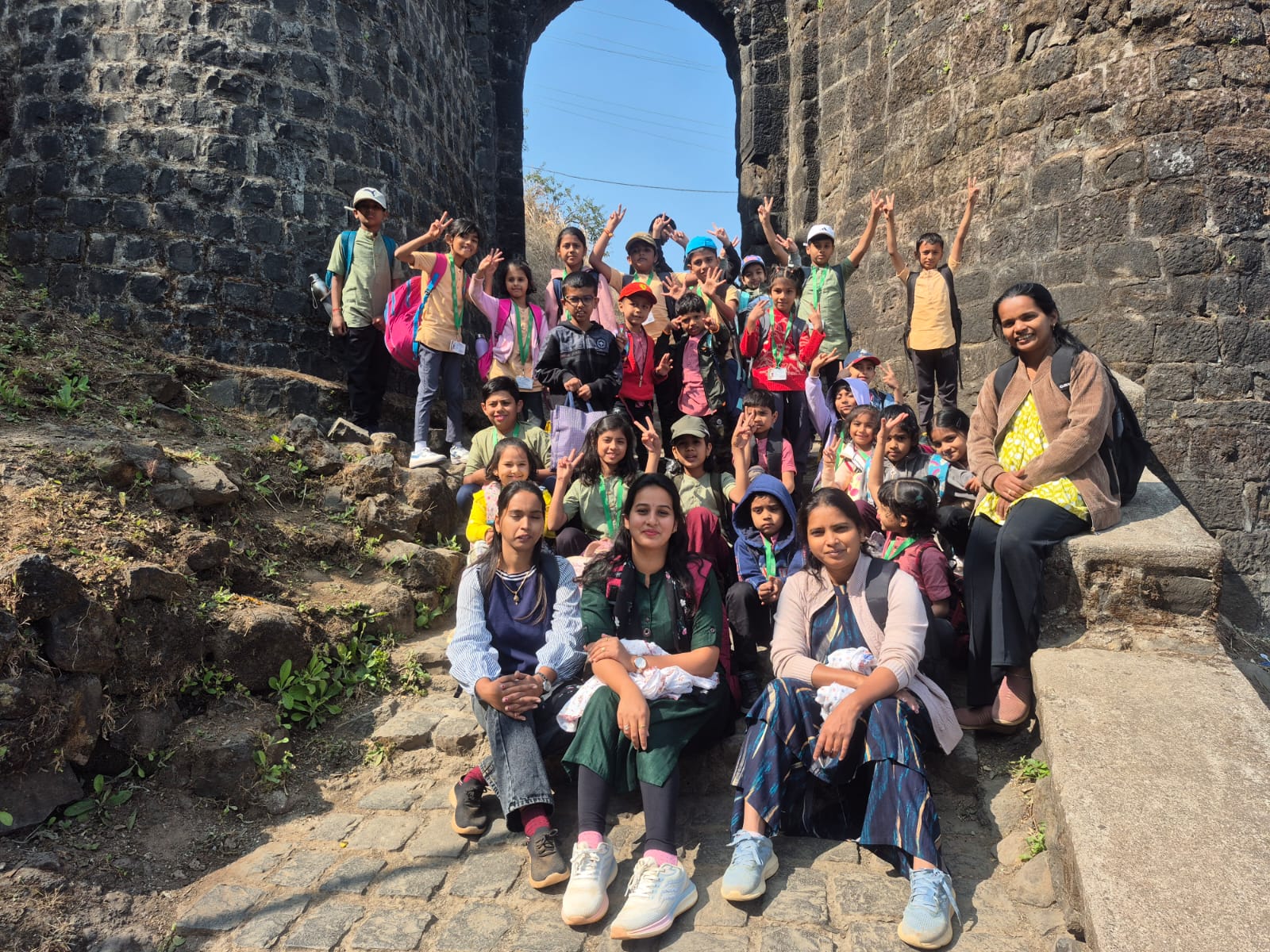
Drama, mentorship, yoga, and meditation become part of regular school life — supporting students' emerging inner lives and social sensibilities. Field trips take on greater scope and physical challenge, building resilience and community.
Introduced through art and experiment — cause and effect
Exact constructions; abstract mathematical reasoning
Renaissance, Age of Exploration, Scientific Revolution
Character development and public speaking through performance
Inner cultivation, healthy body and calm mind
Woodwork, textiles, basket-weaving, ceramics and metalwork
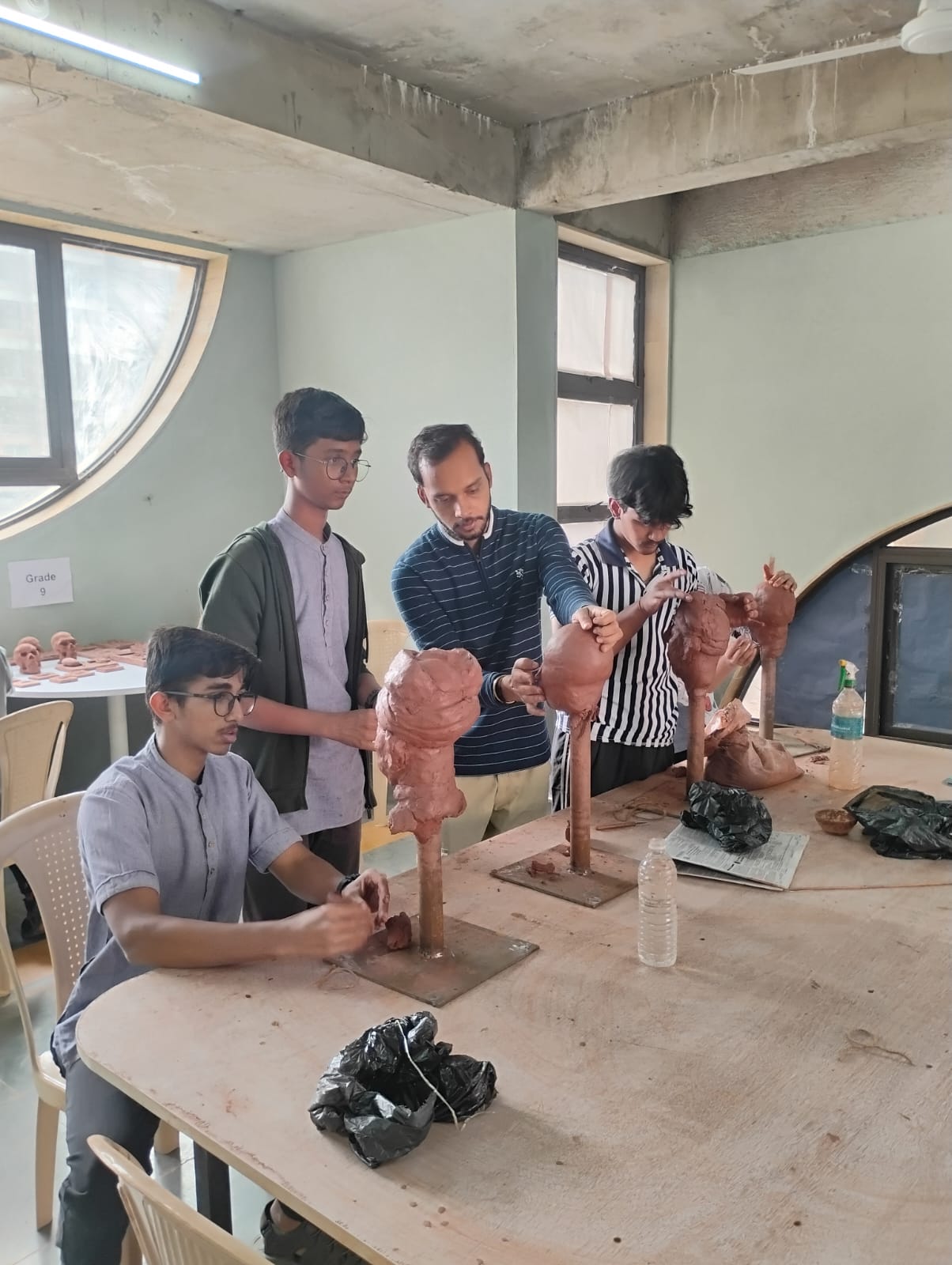
Grades 9–12 · Ages 15–18
The upper years at Gatha are marked by increasing depth, independence, and engagement with the wider world. Students take on extended projects, community work, and rigorous academic study that calls forth their individual capacities and sense of responsibility.
From Grade 9 onwards, students can pursue the NZCSE (New Zealand Certificate of Steiner Education) pathway — an internationally recognised credential aligned with Waldorf principles. Field experiences, mentorships, and senior projects connect learning to life beyond school.
Biology, chemistry, physics — phenomenological and experimental
World literature, ethics, and critical thinking
Global connections, current affairs, and cultural studies
Independent extended projects demonstrating mastery and initiative
Internationally recognised Steiner Education Board certification
Real-world placements, service, and mentored work experience
A Day at Gatha
Each day at Gatha is crafted with intention — balancing thinking, feeling, and doing. Children move gently through the day, experiencing learning rather than rushing through it.
Woven Through Everything
At Gatha, the arts are not extracurricular — they are the medium through which all subjects are taught. Eurythmy, painting, music, and handwork appear in every grade, growing in complexity with the child.
Movement as a language of music and speech
Watercolour and form drawing in every grade
Singing, flute, and orchestra in the upper grades
Knitting through to woodwork and textiles
Come Experience It
The best way to understand Waldorf education is to visit Gatha and meet our teachers. Join us at an Open House or schedule a personal tour.